
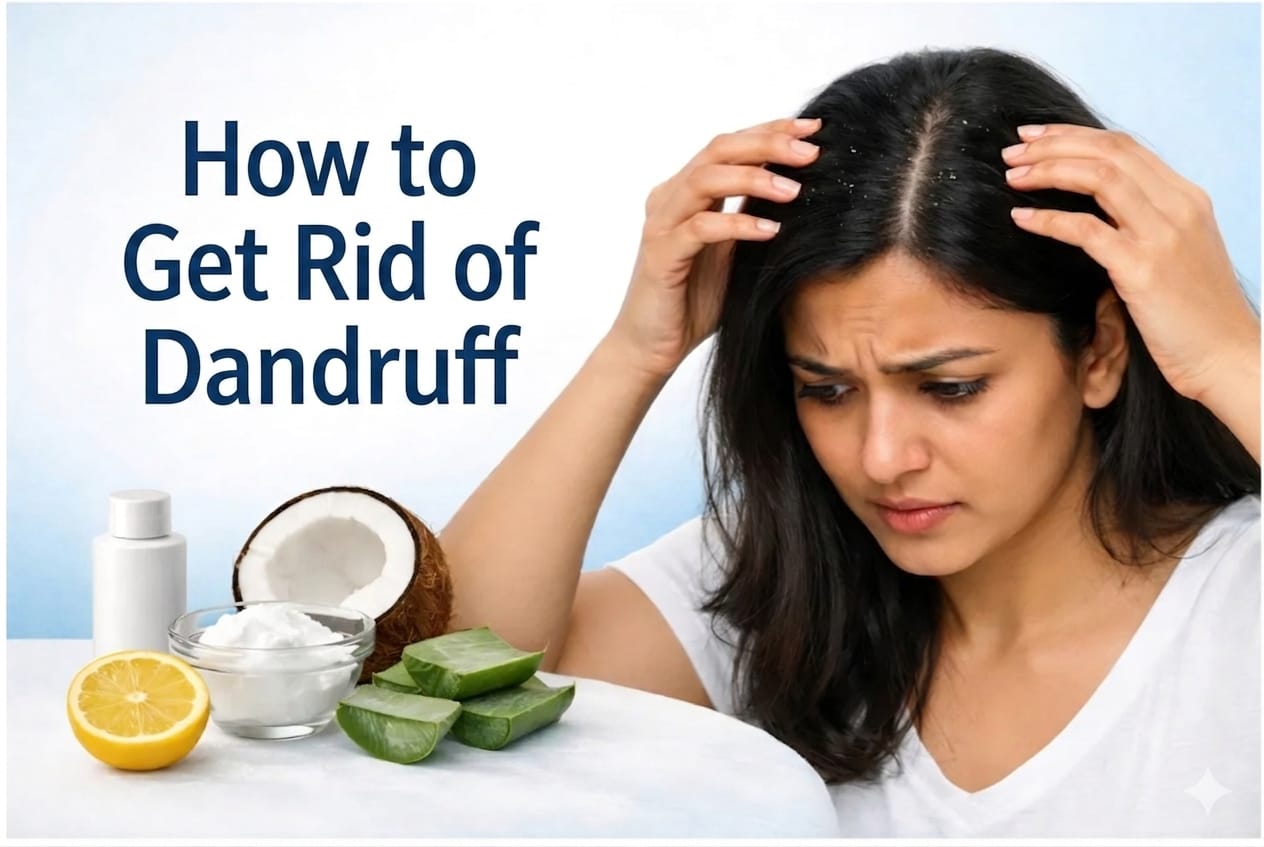
The Truth About Dandruff: What Causes It and How to Get Rid of It
Let’s talk about something that affects nearly 50% of the global population at some point in their lives: dandruff.
Those white flakes on your shoulders. The itching. The embarrassment.
Most people think dandruff is simply dry skin. They grab any anti-dandruff shampoo from the store, use it for a week, and wonder why the flakes keep coming back.
Here’s the truth: dandruff is not just dry skin. And if you don’t understand what’s really causing it, you’ll never get rid of it permanently.
Today, I’m going to break down the real science behind dandruff – from hormones and fungi to diet and stress , and give you, solutions that actually work.
What Is Dandruff, Really?
Dandruff is a chronic inflammatory condition of the scalp called seborrheic dermatitis (when it’s mild, we call it dandruff). It’s caused by three things working together:
- Excess oil (sebum) production on your scalp
- A fungus called Malassezia that feeds on that oil
- Your body’s inflammatory response to that yeast
Let me explain each one.
The Main Culprit – Malassezia (The Fungus on Your Scalp)
Everyone has a fungus living on their scalp. It’s called Malassezia.
Yes, you read that correctly. There is a fungus living on your head right now. And that’s completely normal – in small amounts.
The problem starts when Malassezia grows out of control.
Here’s what happens:
- Your scalp produces sebum (natural oil)
- Malassezia feeds on this oil
- As it eats, it produces byproducts (specifically oleic acid and other free fatty acids)
- For some people, these byproducts trigger an immune response – inflammation, itching, and rapid skin cell turnover
- Your skin cells shed faster than normal (in large, visible clumps) – those are the flakes
Normally, your skin sheds dead cells slowly over about 28 days. With dandruff, that process can speed up to 7–14 days. The cells don’t have time to dry out and fall off individually – instead, they clump together into oily, yellow-white flakes.
Dandruff is not a hygiene problem. You can wash your hair every day and still have dandruff. It’s a reaction to a fungus that lives on everyone’s scalp.
What Makes Malassezia Grow Out of Control?
Not everyone with Malassezia on their scalp gets dandruff. So what triggers the overgrowth?
1. Excess Oil Production (Sebum)
Malassezia eats oil. The more oil on your scalp, the more food for the fungus.
What increases oil production?
- Hormones (especially androgens like testosterone) this is why dandruff often starts during puberty
- Stress (cortisol increases oil production)
- Genetics – some people naturally produce more sebum
2. Hormones
Androgens (male hormones present in both men and women) stimulate your sebaceous glands to produce more oil. This is why:
- Dandruff often begins around puberty
- Men are more likely to have dandruff than women
- Dandruff can flare up during pregnancy or menopause (hormonal shifts)
3. Stress
Chronic stress
- Increases oil production
- Weakens your immune system (making you more reactive to Malassezia)
- Triggers inflammation throughout your body
Many people report that their dandruff gets worse during or after stressful periods – and science backs this up.
4. Diet
What you eat affects your scalp more than you think.
Foods that can worsen dandruff:
- Sugar and refined carbohydrates – they spike insulin, which increases inflammation and oil production
- Dairy – for some people, dairy increases sebum production
- Unhealthy fats (fried foods, processed oils) – promote systemic inflammation
- Alcohol – depletes B vitamins and dehydrates the skin
Foods that may help:
- Omega-3 fatty acids (fatty fish, walnuts, flaxseeds) – reduce inflammation
- Zinc-rich foods (meat, shellfish, pumpkin seeds) – zinc has antifungal properties
- B vitamins (eggs, leafy greens, whole grains) – support healthy skin turnover
- Probiotics (yogurt, kefir, fermented foods) – support immune health
5. Weather and Season
Dandruff is often worse in winter and dry climates. Why?
- Cold air + indoor heating = dry scalp barrier
- Dry skin is more easily irritated
- People wear hats more often (trapping heat and moisture, creating a perfect environment for fungus)
However, in summer, heat and humidity can also increase sweating and oil production. So for some people, dandruff flares up in summer instead.
6. Certain Medical Conditions
Dandruff is more common and more severe in people with:
- Parkinson’s disease (neurological effects on oil glands)
- HIV/AIDS (immune system weakness)
- Epilepsy (some medications increase sebum)
- Obesity (linked to higher inflammation and oil production)
7. Hair Products
Ironically, some anti-dandruff shampoos can make things worse if used incorrectly. Also:
- Heavy oils, pomades, and hair butters can feed the fungus
- Sulfates in shampoos can strip your scalp, causing rebound oil production
- Not rinsing thoroughly leaves residue that traps oil and dead skin
Proven Solutions – What Actually Works
Now for the part you’ve been waiting for. Here are evidence-based solutions, from most effective to least.
First-Line Treatment: Medicated Shampoos
Not all dandruff shampoos are the same. They contain different active ingredients that work in different ways. Rotate between two or three types to prevent resistance.
How to use medicated shampoos correctly :
- Wet your hair thoroughly
- Apply shampoo and massage into your scalp (not just your hair)
- Leave it on for 3–5 minutes – this is critical. The ingredient needs time to work.
- Rinse completely
- Use 2–3 times per week initially. Once controlled, once per week for maintenance.
⚠️ Don’t use medicated shampoo every day – it can irritate your scalp and make things worse.
Second-Line: Natural Remedies (Evidence-Based)
These have some scientific support, but are less potent than medicated shampoos.
1. Tea Tree Oil (5% dilution)
- Add 5-10 drops to your regular shampoo
- Has natural antifungal and anti-inflammatory properties
- One study showed 41% improvement in dandruff severity
2. Apple Cider Vinegar Rinse
- Mix 1 part ACV with 2 parts water
- Apply after shampooing, leave for 5 minutes, then rinse
- Lowers scalp pH, making it harder for fungus to grow
3. Aloe Vera
- Apply pure aloe gel to scalp 30 minutes before washing
- Reduces inflammation and itching
4. Coconut Oil
- Apply to scalp 1 hour before washing
- Has natural antifungal properties (contains lauric acid)
- Especially good if you also have dry scalp
Third-Line: Lifestyle Changes
These don’t treat the fungus directly, but they reduce the conditions that allow it to thrive.
1. Wash your hair more (or less) correctly
- If your scalp is oily: wash every day or every other day
- If your scalp is dry: wash 2-3 times per week
- Always use lukewarm water (hot water strips oil and irritates skin)
- After exercise, rinse sweat off your scalp immediately
2. Manage stress
I know – easier said than done. But cortisol directly affects your oil glands. Even 10 minutes of deep breathing or walking daily can help.
3. Clean your hair tools
Your brush, comb, and pillowcase can harbor the fungus. Wash them weekly:
- Brushes and combs: soak in hot water with shampoo or vinegar
- Pillowcases: change 2-3 times per week
4. Adjust your diet
Try removing these for 2-4 weeks to see if it helps:
- Added sugar
- Refined carbohydrates (white bread, pasta, pastries)
- Dairy (especially milk and cheese)
And add more:
- Omega-3s (salmon, sardines, walnuts)
- Zinc (oysters, beef, pumpkin seeds)
- B vitamins (eggs, leafy greens)
5. Get some sunlight (safely)
Moderate sun exposure can help suppress Malassezia growth. A few minutes on your scalp (without burning) 2-3 times per week. But always protect your face and body with sunscreen.
When to See a Doctor
Try the solutions above for 4-6 weeks. If you see no improvement, or if you experience any of these, make an appointment with a dermatologist:
- Severe itching that disrupts your sleep or daily life
- Hair loss in patches
- Thick, silvery scales (possible psoriasis)
- Redness and swelling that spreads beyond your scalp
- Oozing or crusting (possible infection)
- No improvement after trying medicated shampoos for 8 weeks
A doctor may prescribe:
- Prescription-strength ketoconazole (2% instead of 1%)
- Topical corticosteroids (to reduce severe inflammation – short-term only)
- Oral antifungals (for severe, resistant cases)
Conclusion
Here’s what you need to remember:
- Dandruff is not caused by poor hygiene – it’s caused by a fungus that lives on everyone’s scalp, plus your body’s reaction to it.
- It’s not the same as dry scalp – different causes require different treatments.
- Medicated shampoos work – but you have to use them correctly (leave on for 3-5 minutes, use 2-3 times per week, rotate ingredients).
- Your lifestyle matters – stress, diet, hormones, and weather all affect dandruff.
- You can control it – dandruff is chronic (it can come back if you stop treatment), but it’s very manageable with the right approach.
Dandruff is frustrating. I understand. You wash your hair, you try different products, and those white flakes keep coming back.
But now you know the truth: it’s not your fault, and it’s not hopeless.
Start with a ketoconazole shampoo (Nizoral) or zinc pyrithione (Head & Shoulders). Use it correctly for 4 weeks. Clean your brush. Change your pillowcase. Eat fewer sugary foods. Breathe and lower your stress.
Most people see dramatic improvement within 2-4 weeks.
And if you don’t? See a dermatologist. There are stronger options available.
Your scalp is just skin – and like the rest of your skin, it needs the right balance of oil, microbes, and care. Give it that balance, and those flakes will finally disappear.
Have you tried any of these solutions before? What worked or didn’t work for you?