The Biggest Lie About Weight Loss
What if everything you’ve been told about weight loss is wrong?
For years, people have been told that the secret to losing weight is simple: eat fewer calories and burn more. Yet millions of people follow this advice and still struggle to lose belly fat…
Could the problem be that weight loss is about more than just calories? In this article, we’ll explore how hormones, food quality, and metabolism may play a much bigger role than most people realize
Weight loss is just a matter of eating fewer calories than you’re burning
There is no one bad food. Everything in moderation. Have you ever heard that? A lot of this has been perpetuated by the junk food industry.
And one of the big problems with eating something in moderation is all it takes is a little bit of the wrong foods to keep you wanting more.
Today, I’m going to completely dissect or actually demolish this theory that a calorie is a calorie.
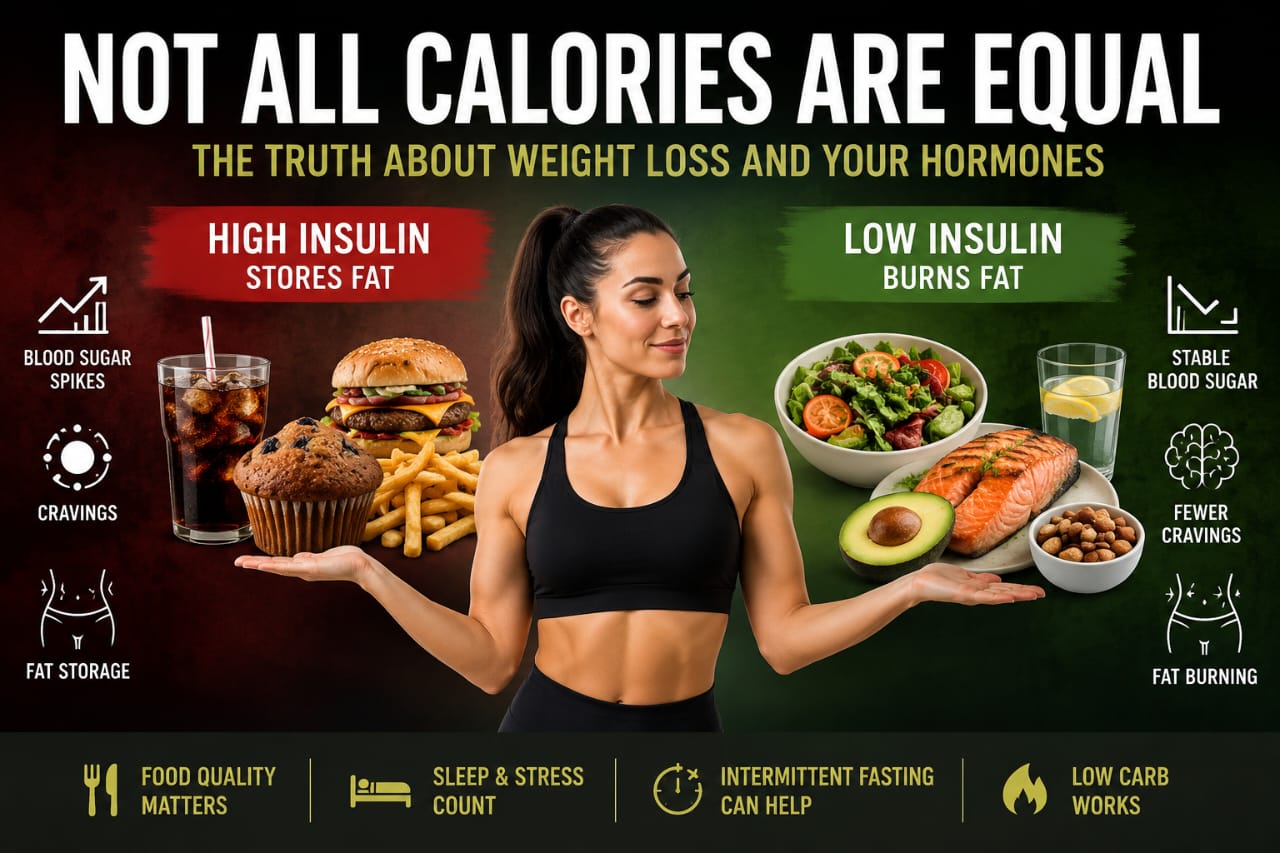
Let’s first examine this through the lens of hormones. There’s a hormone called insulin, and it has a very specific job: it tells calories where to go in your body. When insulin is high, the carbohydrates you eat will be stored as fat. When insulin is low, those calories will be burned for energy.
So what triggers insulin?
Carbohydrates especially refined and sugary ones.
If someone tells you there’s no difference between 100 calories of meat and 100 calories of soda when it comes to your hormones, they are misleading you. Why? Because these two types of calories have completely different effects on insulin. Soda will spike your insulin much higher than meat will and that spike tells your body to stop burning fat and start storing it.
In fact, studies show that liquid sugar calories (like soda) can raise insulin levels up to four times higher than whole food calories from protein or fat , and that elevated insulin can block fat burning for several hours afterward.
In my practice, many people would come in and say, “I’m not losing weight.” When I asked them, “What did you just eat?” they would reply, “Oh, just a little bit of carbs.” But when we looked closer, that “little bit” turned out to be a glass of wine and some bread. They genuinely believed it wasn’t that much. What they didn’t know — and what I eventually explained to them — is that even a small amount of carbohydrates can raise insulin enough to shut down fat burning for hours.
Another hormone related to this is cortisol , your stress hormone. Cortisol indirectly raises insulin, and it comes from your own body , specifically your liver . To make matters worse, cortisol also disrupts your sleep. And here’s the key: most of your body’s fat burning happens during deep sleep. So if stress keeps you up at night, you’re literally blocking your own fat loss.
Another important factor is fiber. Fiber helps reduce blood sugar spikes. For example, eating a whole orange has a very different effect on your blood sugar than drinking orange juice — because the fiber in the whole orange slows down sugar absorption.
Consider industrial starch , a highly refined product that is still classified as a “complex carbohydrate.” Despite that label, it jacks up your blood sugar extremely high. In contrast, a steamed potato (a whole food starch) acts very differently in your body. The general rule is: the more processed a food is, the more calories your body will absorb from it , and the faster those calories will spike your insulin.
The next thing is appetite. If you eat calories that don’t satisfy you, you won’t be able to stick to your diet. It’s simply unsustainable. Why? Because you’ll be hungry all the time and constantly craving sweets. The more nutrient-dense a food is, the more satisfied you’ll feel. That’s why the source of calories matters so much. There are very few nutrients in processed foods, but a wealth of nutrients in whole foods like cod liver, meat, and vegetables
Finally, let’s talk about different types of sugar: glucose and fructose.
Glucose can be metabolized by every cell in your body.
Fructose can only be processed by your liver .
When you consume high fructose corn syrup , which is highly unnatural and processed , you overload your liver. This is very different from natural sources like honey, which come with protective antioxidants. HFCS creates far more inflammation because it lacks the natural co-factors that nature intended.
Excess fructose that the liver can’t process gets converted directly into fat , specifically the dangerous visceral fat around your organs. This is why high fructose corn syrup is strongly linked to non-alcoholic fatty liver disease (NAFLD), which now affects nearly 1 in 4 adults worldwide.
In summary: If you’re struggling to lose weight — especially belly fat — and someone keeps pushing the “calories in, calories out” theory on you, it’s time to take a step back and try something different.
Consider a healthy version of a low-carb ketogenic diet combined with intermittent fasting. Because it’s low in carbs, you’ll find it easy to go from one meal to the next without snacking. Your cravings will disappear, your insulin will drop, and your body will finally start burning its own stored fat.
Remember: Not all calories are created equal. Your hormones decide where calories go , not your willpower.